
Landscaping Ideas
Corten Steel Garden Rings: Uses, Sizes & Installation Tips
Published by MetFab Steel · Bayswater, Melbourne
Corten steel garden rings have become one of the most popular landscaping products in Australia — and it's easy to see why. Whether used as tree surrounds, mulch rings, feature plant frames, or tiered garden art, they bring structure, warmth, and a contemporary feel to any outdoor space.
What Are Corten Garden Rings?
Corten garden rings are circular steel bands — typically rolled from flat Corten plate and welded into rings of varying diameters and heights. They're supplied either fully weathered (orange-brown) or fresh (unpatinaed, grey-silver), with weathering occurring naturally over the first 1–2 seasons outdoors.
Common Uses
Tree Surrounds
Place a large-diameter ring around the base of an established tree to define a mulch zone, protect surface roots, and create a tidy, finished look. Popular diameters for mature trees: 900mm–1500mm.
Feature Plant Frames
A medium-sized ring around an ornamental grass, agave, or statement shrub elevates the planting from background element to focal point. The ring frames the plant beautifully and contains mulch in the root zone.
Tiered Garden Displays
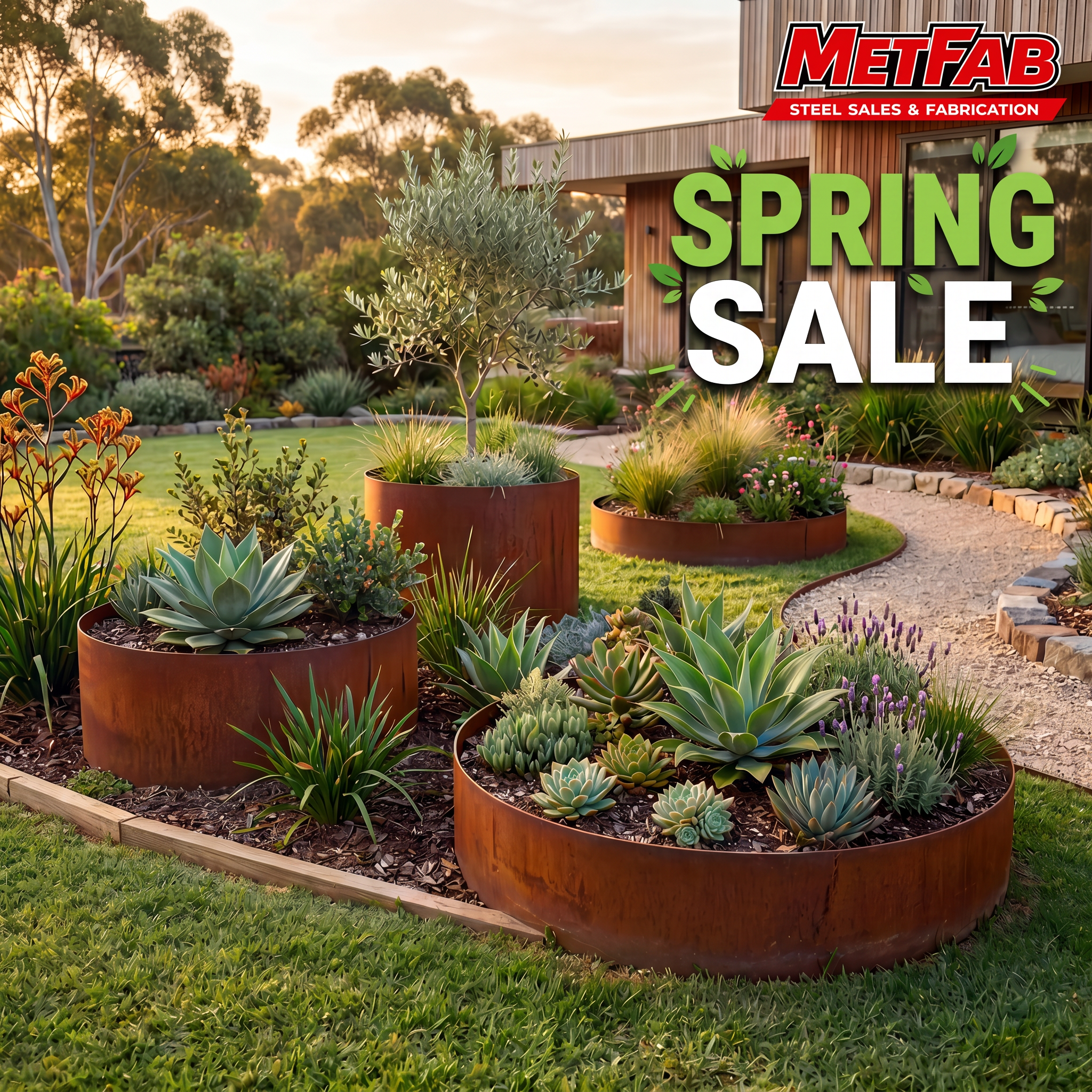
Grouping rings of different diameters and heights creates a sculptural, layered effect — particularly effective on slopes or in contemporary native gardens. Our 3-tier sets are designed for exactly this look.
Vegetable & Herb Gardens
Smaller rings (300–600mm diameter, 200–300mm height) make excellent contained growing zones for herbs and vegetables. They warm up faster than in-ground beds and provide good drainage.
Driveway & Path Accents
Low-profile rings placed along driveways or pathways, planted with succulents or native groundcovers, create a repeating design motif that's both practical and decorative.
Choosing the Right Size
The key dimensions to consider are diameter and height:
- Diameter: Should be proportional to the plant or space. Allow at least 200–300mm of clearance from the trunk or stem for established plants.
- Height: Taller rings (200–300mm) contain more mulch and create a stronger visual statement. Lower rings (100–150mm) are more subtle — they define the space without dominating it.
- Thickness: Standard is 2–3mm plate. Thicker plate lasts longer and holds its shape better over time, particularly for larger diameters.
Installation Tips
- Level the ground before placing the ring — an even base ensures the ring sits flat and looks intentional.
- Push the base of the ring slightly into the soil (10–20mm) to anchor it and prevent it shifting over time.
- For larger diameter rings (1000mm+) on slopes, a small amount of concreting at the base may be needed to prevent movement.
- Fill with quality mulch to retain moisture and suppress weeds — keep mulch 50–100mm away from trunk or stem.
- During the initial weathering phase, the ring will weep orange stain. Place rings before laying adjacent pavers if possible.
Custom Sizes Available
Our standard range covers a wide selection of diameters and heights, but we can fabricate custom sizes from our Bayswater workshop. If you need a non-standard ring for a specific plant, installation, or design requirement, get in touch for a custom quote.
Shop
Related Products
Written by
The MetFab Steel Team
MetFab Steel is a family-run fabrication workshop with over 35 years of experience in structural steel, Corten products, and precision CNC cutting. Our team works hands-on every day with waterjet cutters, welders, and press brakes — so our articles come straight from the workshop floor.