Maintenance Guide
How to Maintain Corten Steel in Your Garden
Published by MetFab Steel · Bayswater, Melbourne
One of the most appealing qualities of Corten steel is its reputation as a low-maintenance material. And while that's largely true once the patina has stabilised, there are still a few things you should know to get the best performance and longest life from your Corten products.
Understanding the Patina Process
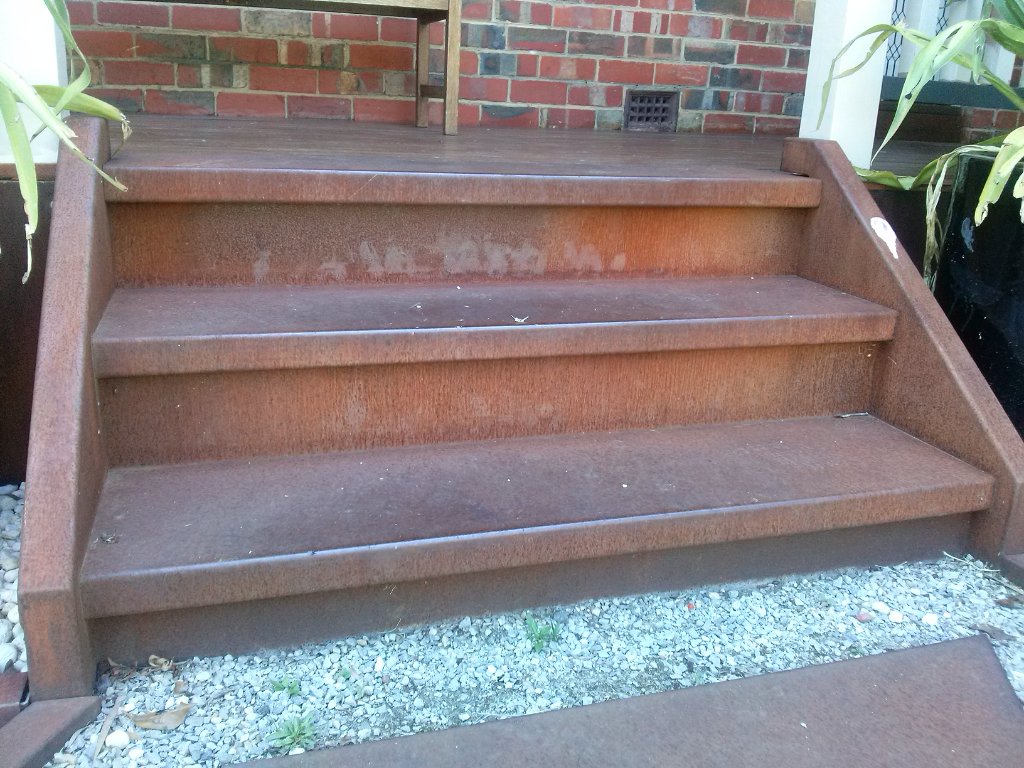
Corten steel forms a protective rust layer — called a patina — when exposed to repeated wet and dry cycles. This dense oxide layer is fundamentally different from the flaky rust you'd see on standard mild steel. Once stable (typically 1–3 years), it significantly slows further corrosion.
During the initial weathering phase, you'll notice orange-brown run-off staining adjacent surfaces. This is normal and expected. Plan your installation to manage this, or apply a sealer to adjacent pavers, concrete, or rendered walls temporarily.
Year One: What to Expect
- Surface colour will change rapidly — from bright orange to deep amber to dark brown.
- Orange run-off staining is at its most pronounced during this phase.
- Some flaking is normal on thinner sections; this will reduce as the patina stabilises.
- Do not seal or paint the steel — it needs airflow and moisture cycling to form the patina correctly.
Ongoing Maintenance Tips
Keep It Clean
Periodically rinse Corten surfaces with clean water to remove salt, fertiliser residue, and organic debris (leaves, mulch). These can trap moisture and introduce chemicals that accelerate corrosion beyond the stable patina layer. A simple garden hose rinse every few months is sufficient.
Avoid Prolonged Contact with Moisture Traps
Mulch, soil, and leaf litter piled against Corten steel can hold moisture continuously, preventing the wet-dry cycle needed for a stable patina. Keep the bottom edge of edging or planters clear of dense organic material where possible.
Check Drainage Around Planters
For Corten planter boxes, ensure adequate drainage holes and don't allow water to pool inside. Standing water that doesn't drain will accelerate corrosion on the interior face. Line planters with geotextile fabric to protect the steel from direct soil contact while still allowing drainage.
Coastal Environments
In coastal areas (within 1km of the ocean), salt-laden air can be more aggressive on Corten. Annual rinsing with fresh water is recommended, and you may wish to apply a Corten-compatible penetrating rust converter every 3–5 years as a precaution.
Scratches and Damage
Minor scratches will self-heal over time as the patina continues to develop. For deeper gouges or areas where the steel has been cut or welded after installation, leave them exposed — the patina will form naturally over the new surfaces.
What Not to Do
- Do not paint or seal Corten steel outdoors — it prevents patina formation and traps moisture underneath.
- Do not use harsh chemical cleaners or pressure washers at high pressure — this can strip the protective patina.
- Do not install Corten in permanently submerged or fully enclosed environments — it needs airflow.
- Do not apply fertilisers directly onto the steel surface.
Long-Term Lifespan
With basic care, Corten steel garden products will last 30–50+ years in a typical Australian outdoor environment. Some Corten structures installed in the 1970s are still performing excellently today. It is genuinely one of the most durable and long-lasting materials you can choose for your garden.
Shop
Related Products
Written by
The MetFab Steel Team
MetFab Steel is a family-run fabrication workshop with over 35 years of experience in structural steel, Corten products, and precision CNC cutting. Our team works hands-on every day with waterjet cutters, welders, and press brakes — so our articles come straight from the workshop floor.