Materials
The Complete Guide to Steel Garden Edging
Published by MetFab Steel · Bayswater, Melbourne
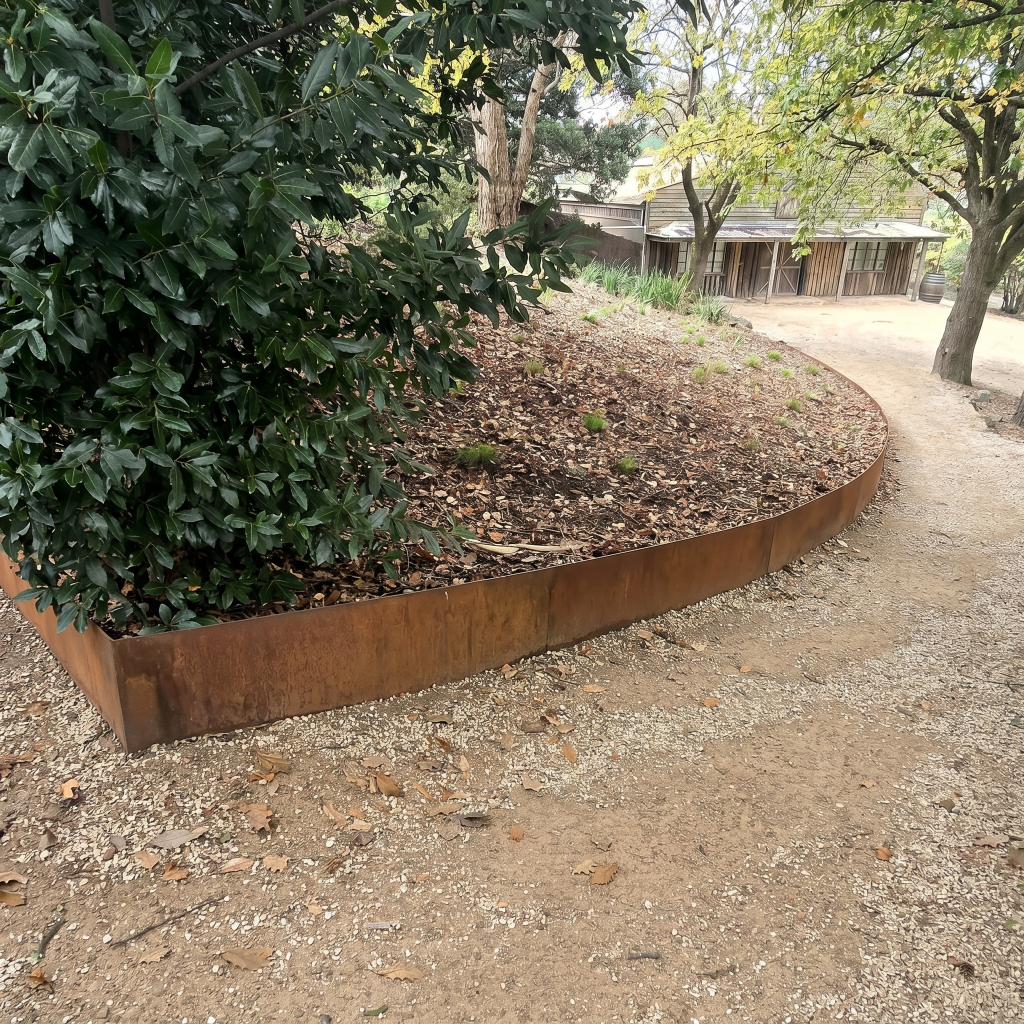
Steel garden edging gives garden beds a clean, crisp border that holds its shape for years. Whether you are a homeowner wanting a tidy lawn edge or a landscaper finishing a premium install, this guide covers everything you need to know — from measuring up to the final stake.
Why Choose Steel Edging?
Compared to timber, plastic, or concrete edging, steel (particularly Corten steel) offers several advantages:
- Slim, minimal profile that does not overpower the planting
- Holds curves and straight lines without warping
- Lasts decades with no maintenance once the patina forms
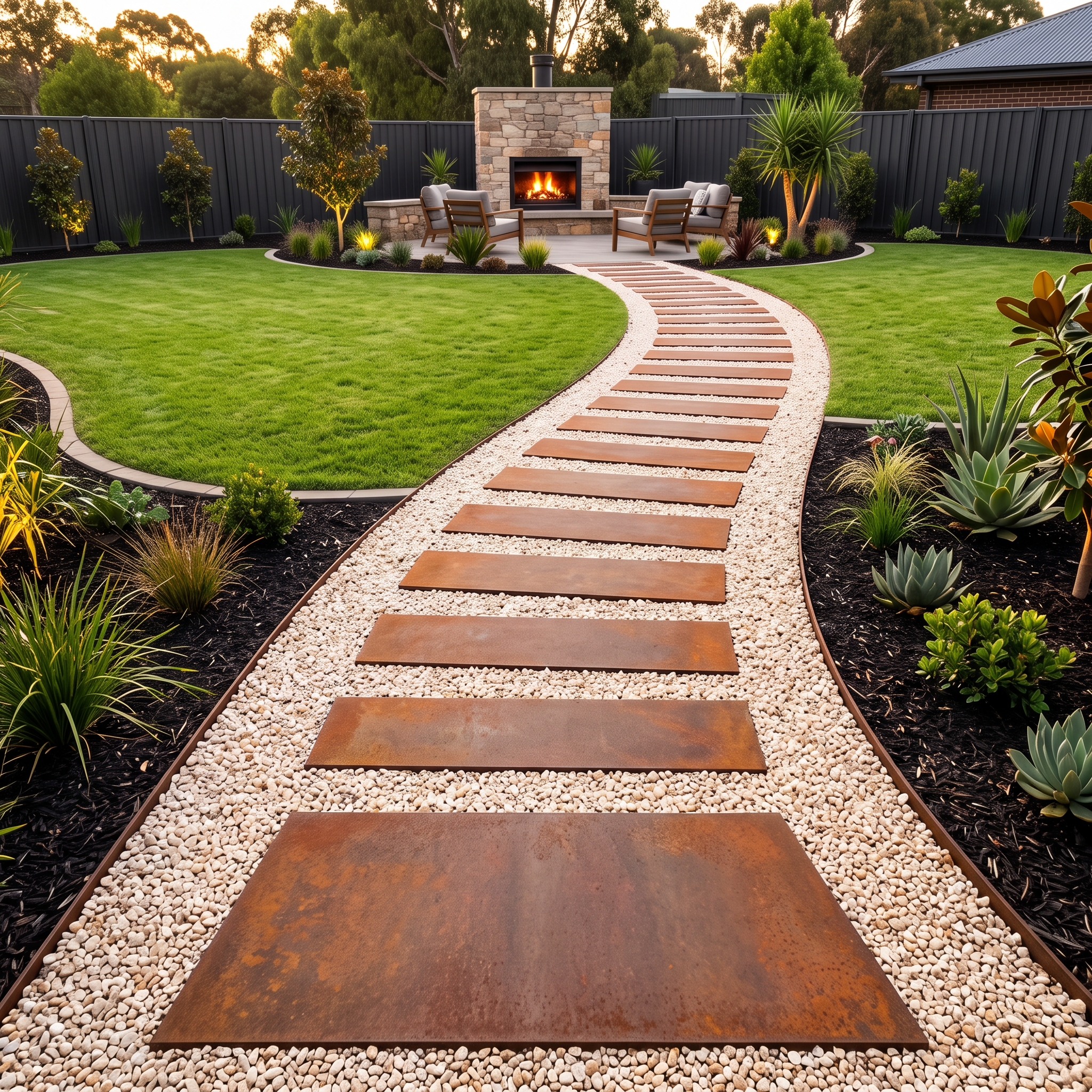
- Clean, modern aesthetic that suits contemporary and native gardens
Step 1 — Measure Your Garden Beds
Walk the perimeter of each garden bed and measure the total linear metres. For curved beds, use a flexible tape or a piece of rope to follow the line, then measure the rope. Add 5–10% extra for wastage at joins and corners.
Our standard edging lengths are 2400mm, though we can cut custom lengths to order. Choose a height that suits your soil depth — 100mm, 150mm, and 200mm are the most common.
Step 2 — Choose Your Thickness
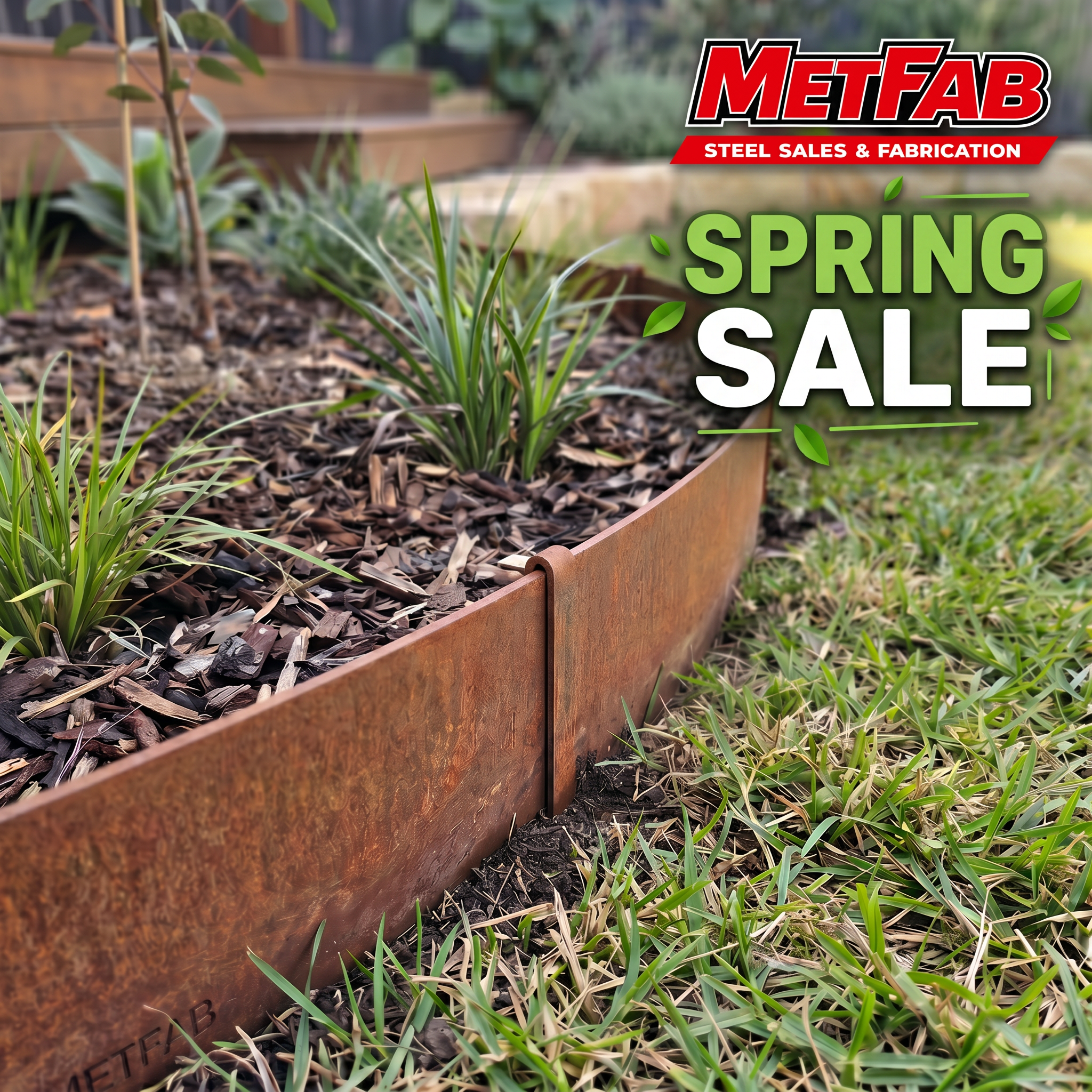
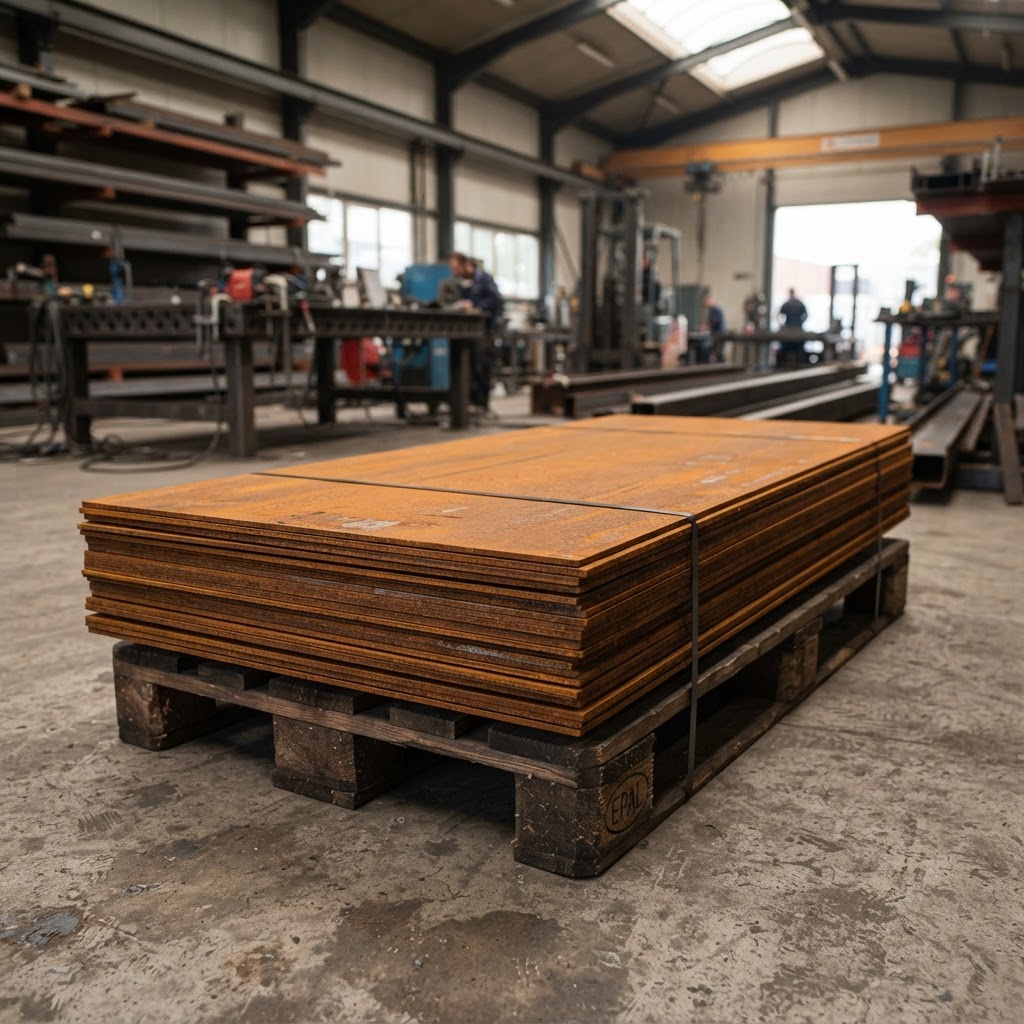
MetFab stocks Corten garden edging in 3mm thickness as standard. This provides excellent rigidity for both straight runs and gentle curves. For tighter radius curves, the steel can be notched or bent on site.
Step 3 — Prepare the Ground
Mark your garden bed line with a string line or spray paint. Use a half-moon edger or spade to cut a clean vertical slot in the ground along the line to the depth of your edging. The edging should sit so the top is flush with or slightly above the lawn surface.
Step 4 — Install the Edging
Push the edging into the slot and drive the included steel stakes through the pre-punched holes into the ground. Stakes should be spaced every 600–900mm for straight runs and every 300–450mm on curves for better support.
Backfill the slot tightly against both sides of the edging and compact the soil to lock it in position.
Step 5 — Handle Corners and Joins
For internal and external corners, the edging can be notched with an angle grinder and bent to the required angle. For joins in long straight runs, overlap two pieces by 50–100mm and secure with a stake through both.
Caring for Your Steel Edging
New Corten edging will weep orange stain onto adjacent pavers for the first season — protect hard surfaces with a tarp or sheeting during rain events while the patina establishes. Once the patina has stabilised (typically 12–18 months), the staining stops and the edging requires no further care.
Shop
Related Products
Written by
The MetFab Steel Team
MetFab Steel is a family-run fabrication workshop with over 35 years of experience in structural steel, Corten products, and precision CNC cutting. Our team works hands-on every day with waterjet cutters, welders, and press brakes — so our articles come straight from the workshop floor.