Cutting
Plasma Cutting vs Laser Cutting: Which Is Right for Your Job?
Published by MetFab Steel · Bayswater, Melbourne
Two of the most widely used CNC metal cutting technologies are plasma cutting and laser cutting. Both slice through steel with computer-controlled precision, but they work differently and suit different applications. Understanding the difference helps you choose the right process — and avoid paying for more than you need.
How Plasma Cutting Works
Plasma cutting uses a jet of ionised gas — plasma — at extremely high temperatures (up to 25,000°C) to melt and blow through conductive metals. The process is fast, particularly on thick materials, and can cut through steel, aluminium, stainless steel, and copper.
CNC plasma cutters follow digital design files with good accuracy — kerf widths (the width of material removed) are typically 1.5–3mm, wider than laser cutting.
How Laser Cutting Works
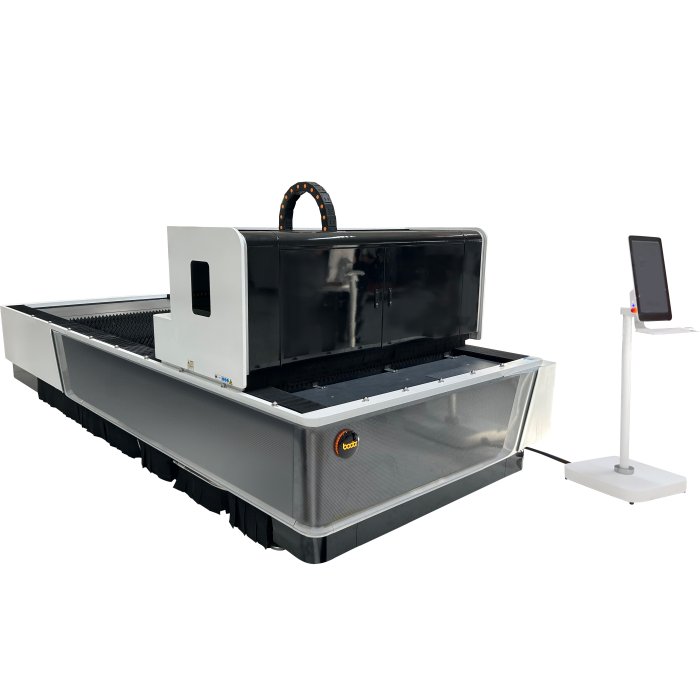
Laser cutting uses a focused beam of light to melt, burn, or vaporise material along a programmed path. Fiber laser technology — what MetFab uses — is the current standard, offering high speed and exceptional precision across a wide range of steel thicknesses.
Kerf widths are typically 0.1–0.3mm, allowing much finer detail, sharper corners, and tighter tolerances than plasma cutting.
Key Differences
| Factor | Plasma Cutting | Laser Cutting |
|---|---|---|
| Edge quality | Good | Excellent |
| Detail / fine patterns | Limited | Excellent |
| Thick plate (25mm+) | Excellent | Good (slower) |
| Speed (thin plate) | Fast | Very fast |
| Heat-affected zone | Larger | Smaller |
| Cost (volume) | Lower | Competitive |
When to Choose Plasma Cutting
- Cutting thick plate (20mm+) where laser speed decreases.
- Large structural parts where tight tolerances aren't critical.
- Budget-sensitive jobs on standard shapes with straight cuts.
When to Choose Laser Cutting
- Intricate patterns, decorative screens, and fine perforations.
- Parts requiring tight dimensional tolerances for assembly.
- Thin to medium plate (up to ~20mm) where speed and quality matter.
- High-volume production runs where consistency is essential.
What About Waterjet?
Waterjet cutting is a third option — it uses no heat at all, making it ideal for materials that would be distorted or degraded by thermal cutting. It's the best choice for very thick plate, non-metals, or heat-sensitive composites. Read our Waterjet vs Laser article for a deeper comparison.
Get a Quote
Not sure which process is right for your job? Send us your drawing or describe your requirements and our team will recommend the best approach and provide a competitive quote.
Shop
Related Products
Written by
The MetFab Steel Team
MetFab Steel is a family-run fabrication workshop with over 35 years of experience in structural steel, Corten products, and precision CNC cutting. Our team works hands-on every day with waterjet cutters, welders, and press brakes — so our articles come straight from the workshop floor.